10th Feb 2026
Kamada Ekadashi: The Sacred Vrat That Fulfills Desires and Removes Curses
Kamada Ekadashi is one of the most auspicio...
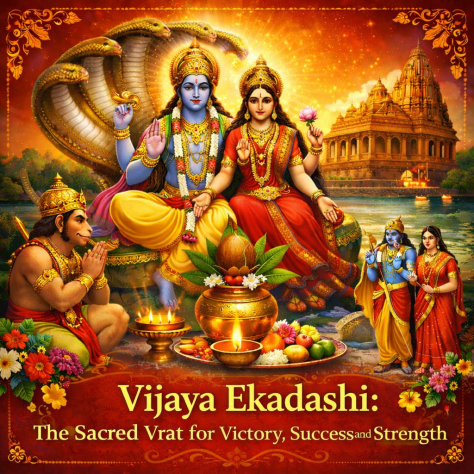
Vijaya Ekadashi is a highly auspicious Ekadashi observed in Sanatan Dharma, especially known for granting victory (vijaya), success in difficult tasks, and protection from obstacles. This Ekadashi is observed during the Krishna Paksha of the Phalguna month (February–March) and is dedicated to Lord Vishnu, the divine protector and sustainer.
The word Vijaya means victory or triumph, symbolizing success over challenges, enemies, fear, and negative forces—both external and internal.
According to the Skanda Purana, Vijaya Ekadashi is associated with the epic Ramayana. When Lord Rama was preparing to cross the ocean and defeat Ravana, Sage Brahma advised him to observe Vijaya Ekadashi vrat.
By observing this Ekadashi with devotion and discipline, Lord Rama received divine strength and ultimately achieved victory in battle. This sacred story highlights the power of Vijaya Ekadashi in ensuring success in righteous efforts.
Observing Vijaya Ekadashi vrat is believed to:
Grant victory in difficult situations
Remove fear, failure, and negativity
Ensure success in work, exams, and competitions
Protect devotees from enemies and obstacles
Strengthen faith, courage, and spiritual discipline
This Ekadashi teaches that true victory is achieved through devotion, righteousness, and surrender to the divine will.
Devotees observe Vijaya Ekadashi with sincerity and faith:
Fasting (Vrat): Nirjala or phalahar fast
Worship: Lord Vishnu is worshipped with tulsi leaves, flowers, and lamps
Prayers: Vishnu Sahasranama and Ekadashi vrat katha
Night Vigil: Bhajan, kirtan, and remembrance of the Lord
Charity: Donating food, clothes, or essentials

Comments (0)
To comment, please Login