21th Feb 2026
Padma Ekadashi: The Divine Fast of Purity, Prosperity & Vishnu’s Grace
Padma Ekadashi is a sacred and spiritually p...
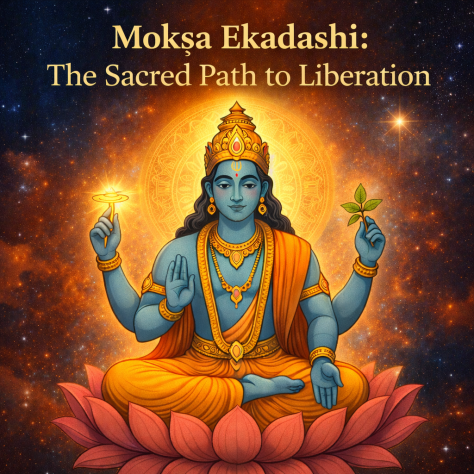
Mokṣa Ekadashi is one of the most spiritually significant Ekadashis in Vaishnavism (Vaishnava Dharma). Observed during the Shukla Paksha (waxing moon) of the Margashirsha month (November–December), this Ekadashi is revered as a powerful gateway to moksha—liberation from the cycle of birth and death.
The word Mokṣa means freedom, liberation, or ultimate salvation. Devotees believe that sincere observance of Mokṣa Ekadashi brings divine grace and leads the soul toward eternal peace in the abode of Lord Vishnu.
According to the Padma Purana and other Vaishnava scriptures, Mokṣa Ekadashi is closely associated with the sacred Bhagavad Gita. It is believed that on this holy day, Lord Krishna revealed the Bhagavad Gita to Arjuna on the battlefield of Kurukshetra, imparting timeless wisdom about dharma, karma, bhakti, and moksha.
Thus, Mokṣa Ekadashi symbolizes:
Divine knowledge
Surrender to the Supreme
Liberation through devotion and righteousness
Observing Mokṣa Ekadashi vrat is believed to:
Cleanse accumulated sins
Free ancestors from bondage (pitru moksha)
Grant peace, wisdom, and spiritual clarity
Lead the devotee toward liberation
Many devotees also perform Gita path (recitation) on this day, considering it highly auspicious.
Devotees observe Mokṣa Ekadashi with great faith and discipline:
Fasting (Vrat): Nirjala (waterless) or phalahar fast
Worship: Lord Vishnu or Lord Krishna is worshipped with tulsi leaves
Scripture Reading: Bhagavad Gita, Vishnu Sahasranama
Bhajan & Kirtan: Devotional singing and chanting
Night Vigil: Staying awake in remembrance of the Lord

Comments (0)
To comment, please Login